
Supermarkets, grocery stores, and food retailers operate in vastly different climates around the world. From the scorching heat of desert regions to the frigid winters of northern countries, refrigeration systems face unique challenges in maintaining product quality, reducing shrink, and cutting energy costs. One universal solution, however, has proven effective in all environments.
Whether installed in meat cases, produce cases, dairy cases, floral refrigeration, deli cases, or freezer cases, night covers serve as a thermal barrier for open refrigerated display cases. But how do they perform across climates with extreme temperature variations? This blog examines the role of Econofrost night covers in cold versus hot climates and how retailers can maximize their benefits regionally.
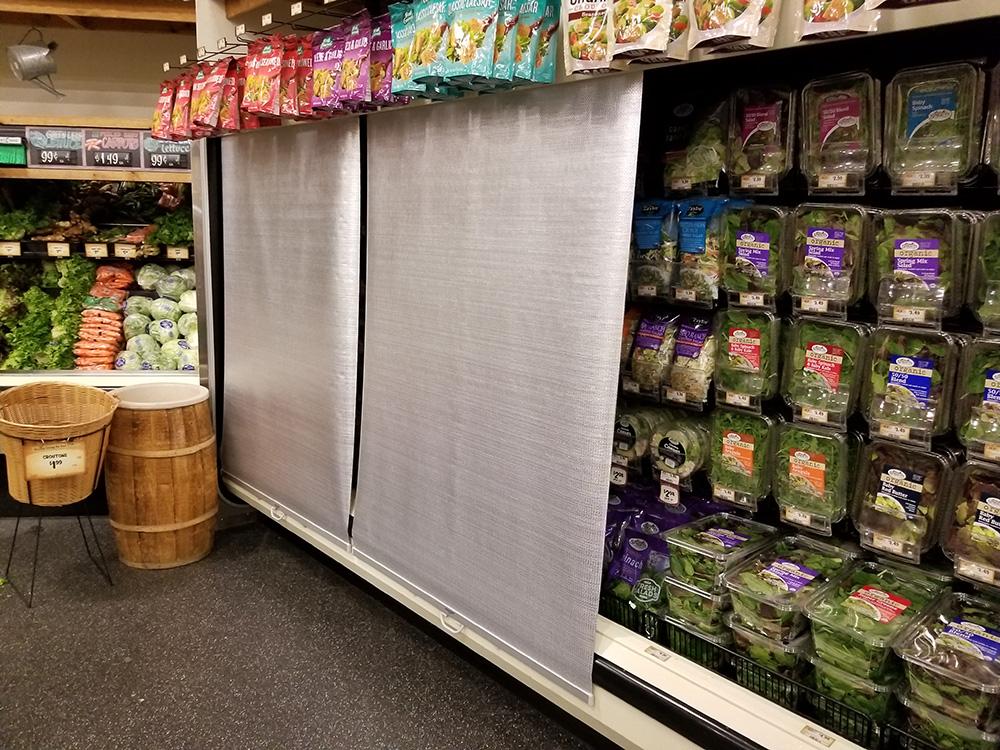
Understanding the Role of Night Covers
Night covers, such as the 9000 Series and 9600 Series night covers, are designed to:
- Save energy by reducing refrigeration loads overnight.
- Protect inventory during power outages or off-peak hours.
- Extend shelf life of perishable products like meat, dairy, and produce.
- Support sustainability goals by lowering carbon footprints.
Constructed from woven aluminum or reflective aluminum, they provide insulation and reflect heat while still allowing refrigerated air circulation. But external climate conditions significantly influence their performance.
Night Covers in Hot Climates
Challenges of Hot Regions
Supermarkets in tropical or desert regions face high ambient temperatures and humidity. Refrigeration systems work overtime to combat heat infiltration into open display cases, driving up electricity costs.
Performance Benefits
- Higher Energy Savings– In hot climates, night covers can reduce refrigeration loads by as much as 50% hourly, offering substantial energy cost reduction refrigerated cases.
- Product Freshness– By acting as a thermal barrier, night covers prevent temperature fluctuations that accelerate spoilage in meat and produce.
- Humidity Control– Night covers for produce misting systems help maintain freshness by reducing excess moisture accumulation overnight.
- Power Outage Protection– In regions prone to outages due to overburdened grids, night covers emergency response features protect inventory from rapid spoilage.
ROI in Hot Climates
The night covers ROI calculator shows faster payback periods in hot climates since the refrigeration system’s workload is much higher. Many retailers in warm regions also qualify for utility rebate night covers, further improving ROI.
Night Covers in Cold Climates
Challenges of Cold Regions
Retailers in colder climates might assume refrigeration costs are lower. However, indoor heating loads create a unique challenge: heated air can infiltrate open cases, forcing refrigeration systems to fight against warm store environments.
Performance Benefits
- Energy Balancing– Night covers reduce the need for refrigeration to compensate for heated air entering cases after hours.
- Shelf Life Extension– Even in colder climates, preservation night covers fresh food prevent premature spoilage, especially for produce and dairy.
- Reduced Equipment Strain– Lower refrigeration demand extends compressor life, reducing maintenance costs.
- Sustainability Gains– Cold-region retailers still benefit from measurable carbon footprint reduction due to consistent kWh savings.
ROI in Cold Climates
While energy savings percentages may be slightly lower than in hot climates, the long-lasting night covers still deliver measurable cost reductions and support ESG reporting. For smaller-format retailers in northern regions, retrofit night covers offer an affordable sustainability upgrade without major capital investment.
Night Covers vs. Glass Doors Across Regions
When comparing night covers vs. glass doors, regional climate plays a role:
- Hot Climates– Glass doors may trap condensation, frustrating shoppers. Night covers keep cases open during the day while still cutting energy costs overnight.
- Cold Climates– Glass doors block impulse buying and require heavy retrofitting. Night covers offer a cost-effective alternative with fewer shopper behavior impacts.
Across both climates, night covers provide cost savings, cleanability, and hygienic solutions with less disruption to merchandising strategies.
Optimizing Night Cover Performance by Climate
Retailers can maximize results by customizing strategies:
- In Hot Regions:
- Pair night coverswith motorized night covers for guaranteed consistency.
- Use reflective aluminum for higher thermal performance.
- Apply night coversenergy management systems with automated scheduling.
- In Cold Regions:
- Focus on long-lasting woven aluminum night coversfor durability.
- Use covers as part of energy management night coversprograms that balance heating and cooling demands.
- Leverage night coverssustainability solution metrics to strengthen ESG reports.
Maintenance Across Regions
Regardless of climate, maintaining covers is critical for longevity:
- Regularly clean to maintain reflective efficiency.
- Inspect and replace night coversreplacement parts like handles or springs.
- Train staff on proper deployment to avoid wear and tear.
These practices ensure performance remains strong for years, no matter the region.
CTA: Boost Energy Savings Anywhere with Rami Covers
Whether your supermarket is battling scorching heat or freezing winters, night covers deliver consistent energy savings, shrink reduction, and sustainability benefits. They adapt to all climates, proving their value as both a cost-saving and environmentally friendly solution.
Explore durable, high-performance models like the 9000 Series and 9600 Series night covers at www.ramicovers.com. Learn more about regional performance, discover installation guides, and connect with experts to help design a solution tailored to your store’s climate challenges.